
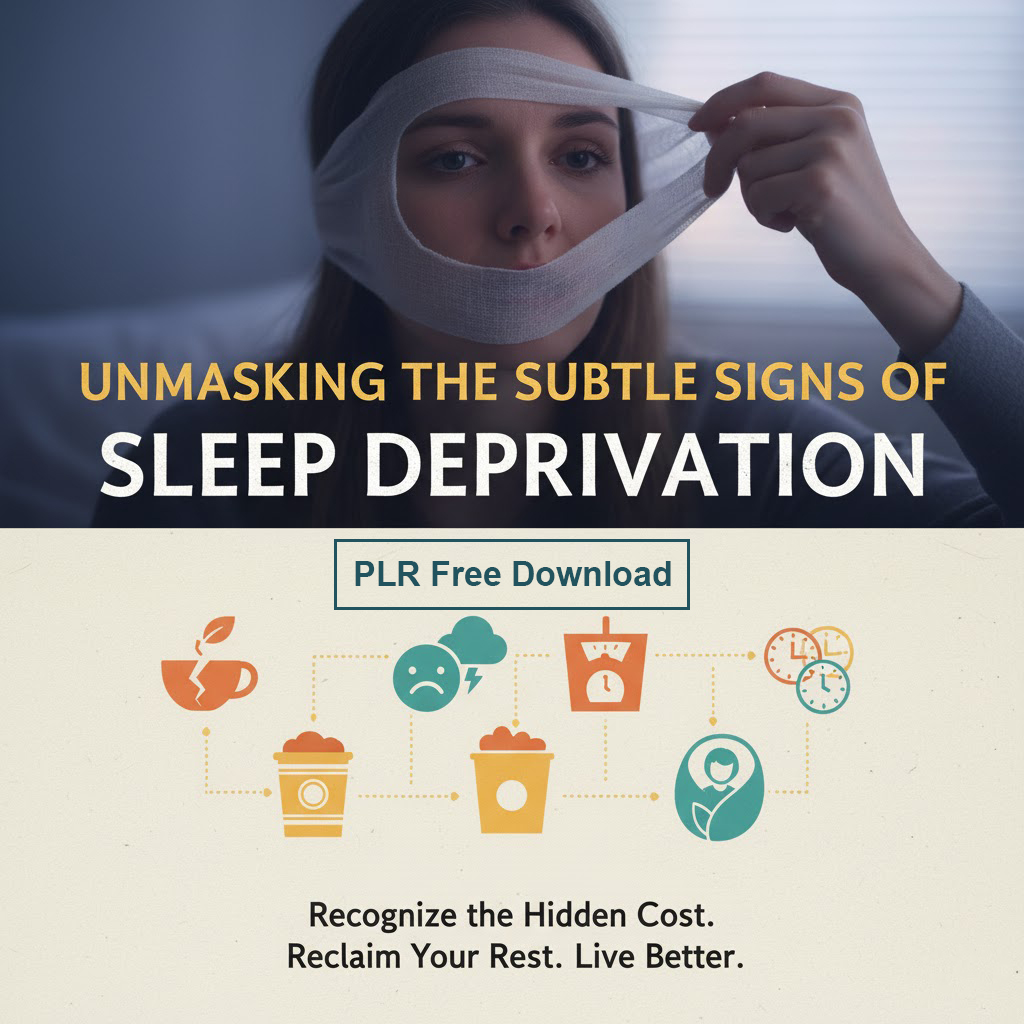

It’s a common paradox of modern life: believing you’re functioning adequately while, beneath the surface, your body and mind are quietly screaming for rest. Many people dismiss the tell-tale symptoms of sleep deprivation, assuming that if they aren’t nodding off at their desk, they must be getting sufficient rest. However, the signs that you’re suffering from a chronic sleep deficit are often far more subtle and insidious than simple daytime sleepiness. These overlooked indicators can profoundly impact your mood, health, performance, and overall quality of life. Understanding these less obvious cues is the critical first step toward reclaiming your health and vitality.
🕰️ The Crucial Difference: Occasional Fatigue vs. Chronic Deprivation
Everyone experiences a sleepless night now and then. The occasional midnight worry, jet lag, or temporary stress can lead to a groggy morning, and that is a perfectly normal human experience. We all pass through phases—such as major life transitions, demanding work projects, or caring for a newborn—when sleep is temporarily disrupted.
The concern arises not with the occasional missed eight hours, but when the lack of sufficient rest becomes a regular occurrence, irrespective of immediate, identifiable circumstances. If you find yourself consistently relying on large amounts of caffeine to power through the day, if your mornings are characterized by hitting the snooze button repeatedly, or if you feel mentally dull most afternoons, your issue is likely moving beyond simple tiredness into the territory of chronic sleep deprivation. This regularity is a neon sign that your fundamental need for sleep is not being met, setting the stage for the harmful accumulation of sleep debt.
📉 The Burden of Sleep Debt: A Cumulative Deficit
Experts often use the concept of “sleep debt” (or sleep deficit) to explain how sleep deprivation can quietly take root in your life without you immediately recognizing the severity of the problem. Sleep debt is the cumulative effect of not getting enough sleep over a period of time. It is generally calculated as the difference between the amount of sleep you need and the amount you get.
This debt is usually not incurred all at once but is accumulated gradually—perhaps just an hour or two of missed sleep every night for several consecutive nights. While you might feel only slightly less sharp after one short night, the effects compound dramatically over a week or a month. This deficit can become so substantial that your normal cognitive and physical functioning is noticeably impaired. To truly recover and restore normal functioning, several nights of consistent, full sleep (often nine to ten hours) are typically required to pay back the accrued debt. Ignoring this debt means walking around in a permanent state of sub-optimal performance, where your brain is struggling to operate at full capacity.
😠 Emotional Instability: The Sleep-Mood Connection
One of the earliest and most noticeable signs of insufficient rest is a marked change in mood. Sleep is crucial for regulating the emotional centers of the brain, particularly the amygdala. When deprived of sleep, the amygdala—the brain’s fear and emotion processing center—becomes hyperactive, while the prefrontal cortex—the area responsible for rational thought and impulse control—is subdued.
This imbalance results in significant emotional instability. Are you finding yourself irritable, snappish, and impatient? Do small annoyances trigger disproportionately large reactions? You may have little tolerance for your own minor mistakes or those of others, viewing minor setbacks as major catastrophes. Lack of sleep is often the silent culprit behind a shorter fuse and increased emotional volatility, making you prone to unwarranted frustration and conflict. A well-rested brain handles stress and disappointment with resilience; a sleep-deprived one responds with disproportionate negativity.
🍕 Metabolic Chaos: Appetite, Cravings, and Weight Gain
Few people realize that a lack of sleep fundamentally disrupts the hormones that control hunger and metabolism, potentially leading to increased appetite and subsequent weight gain. When you are sleep-deprived, two key hormones go haywire:
- Ghrelin: Often called the “hunger hormone,” Ghrelin levels increase when you’re tired, signaling to your brain that you need to eat.
- Leptin: Known as the “satiety hormone,” Leptin levels decrease, meaning your body doesn’t register that it’s full.
This hormonal cocktail creates a perfect storm: you feel hungrier, and you have a harder time feeling satisfied. Furthermore, your body, desperate for quick energy to compensate for the lack of sleep, often drives you to crave sweets, simple carbohydrates, and high-calorie junk foods.
Even without a perceived change in appetite, research shows that sleep deprivation can directly contribute to weight gain. This is likely due to the resulting hormonal imbalances and the body’s compromised ability to properly metabolize glucose, making cells more resistant to insulin. The less you sleep, the more your body is biologically primed to store fat, turning sleep deprivation into a significant long-term health risk for obesity and metabolic syndrome.
🧠 Cognitive Impairment: The Cascade of Mistakes
The inability to focus and execute complex tasks is a hallmark of sleep deprivation. If you find yourself consistently making what seem like “silly mistakes”—dropping things, forgetting important dates, messing up simple arithmetic, or requiring repeated instruction—it’s a clear indication that your tired brain is struggling.
Studies confirm that lack of sleep severely impairs executive functions:
- Attention and Concentration: Your ability to sustain focus diminishes, making it difficult to concentrate during meetings, while driving, or while reading.
- Memory: Both short-term recall and the consolidation of long-term memories are compromised. You may forget why you walked into a room or struggle to recall information learned the day before.
- Decision-Making: The brain’s ability to assess risks and make sound judgments is lowered, which is why lack of sleep is as dangerous as alcohol impairment when driving or operating machinery.
These regular, low-level operational failures are your brain’s way of signalling a critical need for rest.
🌧️ The Shadow of Depression and Anxiety
The relationship between sleep and mental health is bidirectional and complex. While sleep deprivation may be a symptom of mental health disorders like depression or anxiety, there is compelling evidence that it can also be a causal factor or at least a significant contributor.
When sleep is chronically poor, the brain’s ability to regulate mood and process negative emotions is compromised, which can lead to or exacerbate symptoms of depression. If you are experiencing feelings of persistent sadness, hopelessness, loss of interest in activities you once enjoyed, and are struggling to determine a clear cause, taking a serious look at your sleep hygiene and habits is paramount. Furthermore, anxiety often results from an overactive stress response; lack of sleep keeps your body in a state of high alert, making you more susceptible to anxious thoughts and panic.
Addressing sleep deprivation is a foundational step in any mental wellness strategy, as sufficient rest gives your brain the necessary resources to manage stress and stabilize mood.
🌟 Taking Action: Prioritizing Your Sleep
Recognizing these subtle yet serious signs is the first step toward better health. If any of the above indicators describe your regular experience, it is time to prioritize your sleep as a non-negotiable part of your health regimen. A full seven to nine hours of quality sleep for adults is not a luxury; it is a biological necessity for physical repair, emotional regulation, and cognitive clarity.