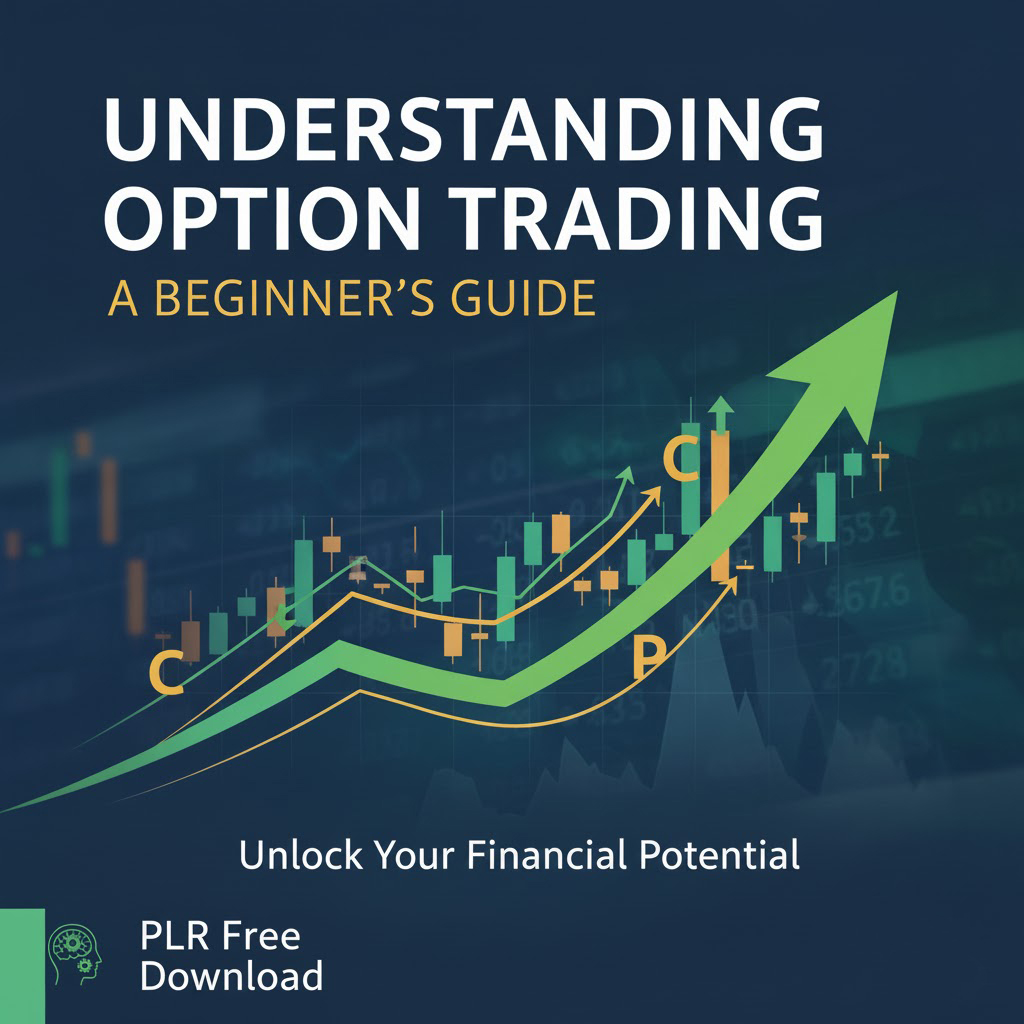

Option trading often carries a reputation for complexity, shrouded in jargon that intimidates new investors. However, at its core, an option is nothing more than a simple contract. It provides a unique blend of leverage and risk management, giving traders a powerful tool that goes beyond the straightforward buying and selling of stocks. Understanding this foundational concept is the essential first step toward navigating the derivatives market with confidence.
In this comprehensive guide, we will peel back the layers of option trading, demystifying the terminology and explaining the mechanics of how these contracts work. By the end, you will grasp the fundamental differences between calls and puts, understand the critical role of strike prices and premiums, and appreciate both the potential rewards and inherent risks of integrating options into your investment strategy.
What is an Option?
At its simplest, an option is a financial contract that gives the buyer the right, but not the obligation, to buy or sell an underlying asset—such as a stock, index, or commodity—at a specific price, on or before a specific date.
This is the key concept: the right, not the obligation. If the market moves favorably, the option holder can choose to execute the right. If the market moves against them, they can simply let the option expire worthless, losing only the initial cost paid for the contract, known as the premium.
Every option contract is tied to four critical components:
- The Underlying Asset: The security (e.g., 100 shares of Apple stock) that the contract relates to.
- The Strike Price: The predetermined price at which the buyer can execute their right to buy or sell the underlying asset.
- The Expiration Date: The last day the contract is valid. After this date, the option becomes worthless.
- The Premium: The price paid by the option buyer to the option seller (the writer) to acquire the contract. This is the seller’s profit and the buyer’s maximum risk.
The Two Fundamental Types of Options
All option strategies are built upon the foundation of two core types of contracts: Call Options and Put Options. These two contracts represent the two sides of a market forecast: bullish (expecting price to rise) and bearish (expecting price to fall).
Call Options: The Right to Buy
A Call Option grants the buyer the right to buy the underlying asset at the specified strike price on or before the expiration date.
- Bullish Position: Traders buy calls when they believe the price of the underlying asset will increase significantly above the strike price before the expiration date.
- When a Buyer Profits: The buyer of a Call Option profits when the market price rises above the strike price plus the premium paid. They gain maximum leverage from a stock’s upward movement.
- The Seller’s Role: The seller (or writer) of a Call Option is taking a bearish or neutral stance. They collect the premium and hope the stock price stays below the strike price, allowing the option to expire worthless.
Put Options: The Right to Sell
A Put Option grants the buyer the right to sell the underlying asset at the specified strike price on or before the expiration date.
- Bearish Position: Traders buy puts when they believe the price of the underlying asset will decrease significantly below the strike price before the expiration date.
- When a Buyer Profits: The buyer of a Put Option profits when the market price falls below the strike price minus the premium paid. This allows them to profit from downward price movement without shorting the stock.
- The Seller’s Role: The seller of a Put Option is taking a bullish or neutral stance. They collect the premium and hope the stock price stays above the strike price.
Essential Options Terminology
To trade successfully, you must master the critical terms that describe the relationship between the current stock price and the option’s strike price:
- Underlying Asset: The security (usually 100 shares of a stock) that the option is based on. One option contract typically controls 100 shares.
- Strike Price (Execution Price): The fixed price at which the buyer can exercise the option.
- Premium: The current market price of the option contract itself, paid by the buyer to the seller. This is typically quoted per share (e.g., $2.00 premium means the contract costs $200 for 100 shares).
- Intrinsic Value: The amount by which an option is in-the-money. For a call, it’s the stock price minus the strike price (if positive). For a put, it’s the strike price minus the stock price (if positive).
- Time Value (Extrinsic Value): The portion of the premium that is not intrinsic value. It represents the value investors assign to the possibility that the option will move into the money before expiration. Time value decreases as the expiration date approaches—a phenomenon known as time decay (or Theta).
Option Status: ITM, OTM, and ATM
- In-the-Money (ITM): An option has intrinsic value.
- Call: When the stock price is above the strike price.
- Put: When the stock price is below the strike price.
- Out-of-the-Money (OTM): An option has no intrinsic value and is composed only of time value.
- Call: When the stock price is below the strike price.
- Put: When the stock price is above the strike price.
- At-the-Money (ATM): The strike price is exactly or very near the current stock price.
Why Trade Options? Leverage and Hedging
Options are utilized by both large institutions and retail traders for two primary strategic advantages: leverage and hedging.
The Power of Leverage
Leverage is arguably the most appealing feature of options for speculation. Because a single contract allows you to control 100 shares of a stock for a fraction of the cost of buying the shares outright, a small movement in the stock price can result in a massive percentage return on the capital invested in the option.
Example:
- Stock Price: $100/share. Cost to buy 100 shares: $10,000.
- Call Option Premium: $2.00/share. Cost to buy one contract (100 shares): $200.
If the stock rises to $105 (a 5% increase), the stock buyer makes $500 (a 5% return). The option buyer’s $200 contract, now worth at least $500 in intrinsic value, could easily be sold for $700, netting a $500 profit (250% return) on the capital invested. This magnified return potential is what draws speculators to the market.
Hedging: Portfolio Insurance
For long-term investors, options serve as an indispensable tool for hedging or insuring a portfolio against short-term market downturns.
- Protection for Long Stocks (Buying Puts): If an investor owns 100 shares of Stock X, they can buy a Put Option contract with a strike price slightly below the current market price. If the stock crashes, the Put Option acts as insurance, guaranteeing the investor the right to sell their shares at the Put’s higher strike price, thus limiting their loss.
- Protecting Against a Call (Selling Covered Calls): An investor who owns a stock can sell (write) a Call Option against it, a strategy known as a covered call. They collect the premium as income. If the stock price remains stable or declines, the option expires worthless, and they keep the premium. If the stock price rises above the strike price, the stock may be called away (sold) at the strike price, but they still profited from the premium collected.
Risks and the Cautious Approach
While the potential for high returns is attractive, option trading is inherently high-risk.
- Total Loss of Premium: Unlike stocks, which can theoretically exist forever, options have a finite life. The vast majority of options expire worthless, meaning the entire premium paid by the buyer is lost.
- Time Decay: The relentless nature of time decay (Theta) works against the option buyer, constantly eroding the value of the contract.
- Seller Risk: Option sellers (writers) face potentially unlimited loss when selling uncovered (naked) call options, as the stock price can theoretically rise indefinitely. This is why most retail traders stick to buying options or using defined-risk strategies like covered calls.
Option trading requires a disciplined, analytical approach and a solid understanding of market movements. It is crucial to start small, educate yourself continuously, and never allocate more capital than you are prepared to lose entirely. Used wisely, options can be a powerful amplifier for your investment goals; used carelessly, they can quickly deplete capital.