
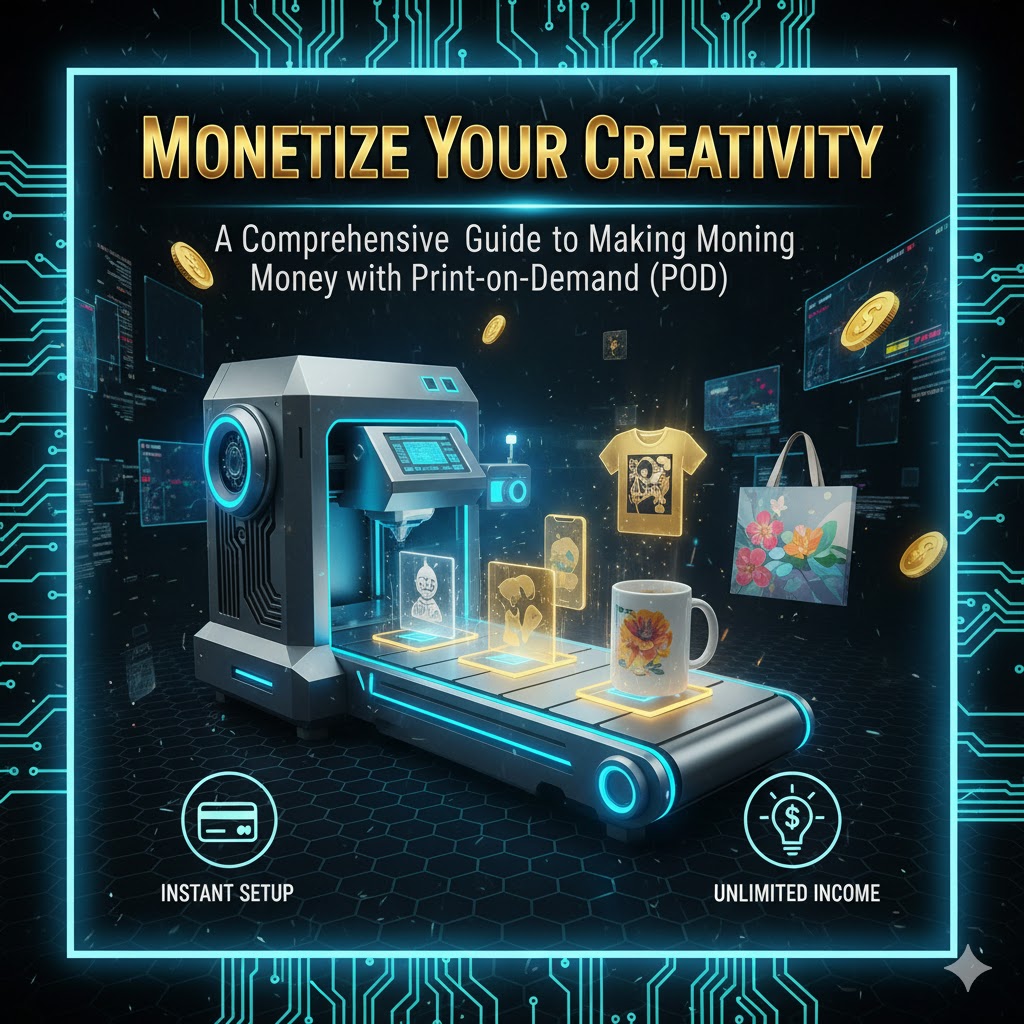

The Print-on-Demand (POD) business model has revolutionized e-commerce, offering a low-risk pathway for entrepreneurs, artists, and creators to sell custom-designed products globally.1 Unlike traditional retail, POD means you don’t hold any inventory.2 When a customer places an order in your online store, a third-party supplier handles the printing, packaging, and shipping directly to them, leaving you to focus on design and marketing.3
This comprehensive guide will walk you through the essential steps to launch and scale a profitable POD business, transforming your creative ideas into a steady income stream.
1. Find Your Profitable Niche
The biggest mistake new POD sellers make is trying to sell to everyone. The print-on-demand space is saturated with generic products. Success lies in focusing on a specific, passionate niche—an audience that shares a deep interest, hobby, or identity.
Why Niche Matters:
- Less Competition: Niche markets have fewer sellers, making it easier for your products to be discovered.4
- Higher Conversion: You can tailor your designs and marketing to speak directly to a loyal audience, leading to more sales.5
- Easier Marketing: Ad targeting becomes precise when you know your customer’s specific interests (e.g., instead of targeting “all dog owners,” target “French bulldog owners who hike”).
How to Find a Winning Niche:
- Passion & Interests: Start with what you or your community are passionate about (e.g., specific sports, vintage video games, obscure literary references, local geography).6
- Evergreen Niches: Look for topics with year-round demand like professions (nurses, teachers, engineers), family life, and pets.7
- Trending Niches: Utilize tools like Google Trends, Etsy/Amazon bestsellers lists, and social media (TikTok, Reddit) to spot growing interests like sustainability, specific meme culture, or mental wellness themes.8
Note: Aim for a niche that is specific enough to stand out but broad enough to have a viable customer base.
2. Create Original and Compelling Designs
Your design is the core product and your competitive edge. In a crowded marketplace, original, high-quality, and meaningful designs are what sell.
- Understand the Audience: Your design should resonate emotionally with your chosen niche. Simple, message-driven designs, particularly those with humor or powerful quotes, often outperform complex artwork.9 For example, a funny, relatable quote about the struggles of being a history teacher.
- Use the Right Tools: Utilize graphic design software like Adobe Illustrator, Photoshop, or even user-friendly tools like Canva.10 If design isn’t your strength, consider hiring a freelance designer on platforms like Fiverr or Upwork, but provide clear, detailed instructions.11
- Intellectual Property (IP): NEVER use copyrighted or trademarked material (e.g., characters, logos, band names) in your designs. This is a quick way to get your store shut down and face legal action.
- Versatility: Design assets should be created in high resolution and be scalable to look great on various products—from a small mug to a large apparel item.
3. Select Products and Partner with a POD Provider
The POD supplier is your business partner, handling the physical side of your operation.12 Choosing the right one is crucial for product quality and customer satisfaction.
Choosing Products:
Popular POD products include T-shirts, hoodies, mugs, tote bags, phone cases, posters, and wall art.13 When starting, stick to a few best-selling products that align with your niche (e.g., yoga mats for a wellness niche, funny T-shirts for a meme niche).
Selecting a POD Partner:
Evaluate suppliers like Printful and Printify based on key criteria:
- Product Quality: Order samples! This is non-negotiable. You must verify the color accuracy, material quality, and durability of the finished product.
- Shipping Times & Costs: Factor these into your overall pricing. Fast, reliable shipping is a major competitive advantage.
- Integration: Ensure the platform integrates seamlessly with your chosen e-commerce store (e.g., Shopify, Etsy, WooCommerce).
- Branding Options: Some providers offer custom labels, packing slips, or package inserts to help build your brand identity.
4. Build Your Online Store and Optimize Listings
You need a storefront to showcase and sell your creations. You can choose an established marketplace or build your own dedicated website.
Where to Sell:
- Marketplaces (Etsy, Amazon): Benefit from high built-in traffic but face more competition and pay higher fees.14 Excellent for testing designs and reaching a broad audience.
- Standalone Store (Shopify, Wix): Offers complete control over branding, customer data, and profit margins.15 Requires more effort to drive initial traffic.
Optimization is Key:
- High-Quality Mockups: Use your POD partner’s mockup generator or high-quality image tools to create professional, realistic product images.16 A visual presentation is everything in e-commerce.
- SEO-Rich Listings: For each product:
- Title: Include your primary keywords (e.g., “Funny Cat Mom T-Shirt,” “Abstract Art Throw Pillow”).
- Description: Write engaging, benefit-driven copy. Include relevant keywords, mention materials, sizing, and care instructions.
5. Master Pricing and Marketing for Profit
A successful POD business requires healthy profit margins and a solid marketing strategy to drive traffic.17
Pricing Strategy:
Your selling price must cover the Base Product Cost (supplier cost + shipping) plus your desired Profit Margin.18 A typical markup is 40-70% of the base cost.19
$$\text{Selling Price} = \text{Base Cost (Product + Shipping)} + \text{Profit Margin}$$
Research competitor pricing for similar products to ensure you remain competitive while maximizing profit. Consider offering occasional free shipping, factoring the cost into your retail price.
Effective Marketing:
- Content Marketing: Create engaging content related to your niche. If you sell to bakers, share recipes or baking tips on Instagram or TikTok, naturally showcasing your branded aprons or mugs.
- Social Media: Engage with your target audience on platforms where they congregate (e.g., Facebook Groups, Reddit, Instagram hashtags).20
- Paid Ads: When you find a “winning” design, scale your sales using targeted advertising (Facebook/Instagram Ads, Google Shopping Ads) to reach a wider audience within your niche.21
- Email Marketing: Build an email list to announce new designs, run promotions, and turn one-time buyers into repeat customers.22
6. Analyze, Scale, and Automate
The final step is to treat your POD venture like a real business by analyzing data and planning for growth.
- Track Performance: Use your platform’s analytics to identify your best-selling products and designs. Double down on what works and cut products that aren’t selling.
- Replicate Winning Designs: If a quote or graphic is a hit on a T-shirt, replicate it across other popular products like mugs, hoodies, or posters.23
- Expand Your Catalog: Consistently introduce new designs and explore new product lines within your niche to increase your potential for sales (volume is key in POD).24
- Automate: Utilize the automated order fulfillment features of your POD platform to ensure every order is processed seamlessly, freeing up your time to focus on creative tasks and marketing.
Print-on-Demand is a marathon, not a sprint. It requires patience, consistency, and a continuous focus on providing unique value to a defined audience. By following these steps and committing to regular iteration, you can successfully monetize your creativity and build a sustainable, profitable e-commerce business.