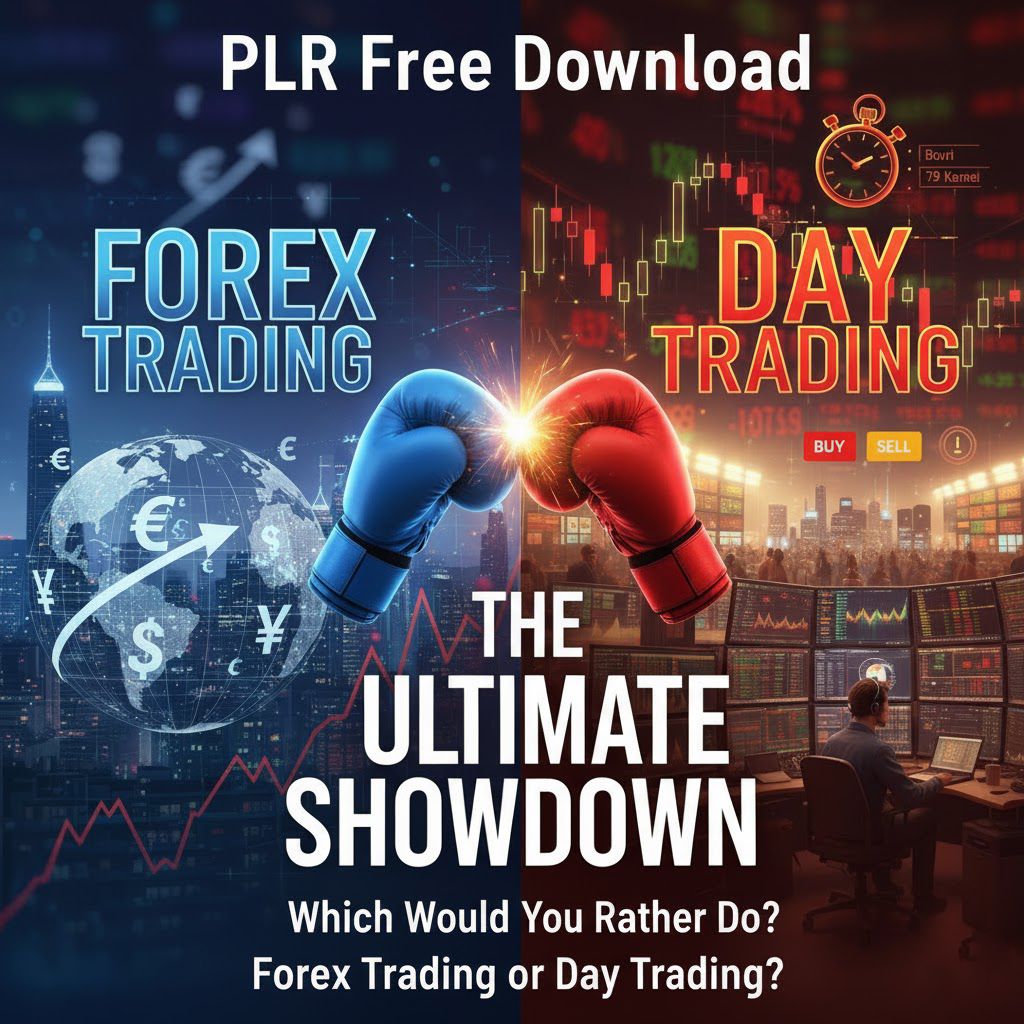

For anyone stepping into the dynamic world of active market speculation, two terms frequently dominate the conversation: Forex and Day Trading. Often, they are mistakenly used interchangeably, yet they represent fundamentally different concepts. One is a vast, global market for a specific asset class, and the other is a time-based strategy applicable to virtually any market.
Deciding which path to pursue—or how to combine them—requires a deep understanding of each one’s structure, demands, and risks. This article delves into the essential differences to help you determine which strategy aligns best with your financial goals, personality, and lifestyle.
Defining the Fundamentals: Market vs. Strategy
To make an informed choice, we must first establish clear definitions. The key distinction is that Forex is a market, while Day Trading is a strategy.
Forex (Foreign Exchange) Trading is the global, decentralized market where currencies are traded. It involves simultaneously buying one currency and selling another, speculating on the relative price fluctuation between the two (known as a currency pair, such as EUR/USD). The Forex market is, by far, the largest financial market in the world, with trillions of dollars exchanged daily. While currency pairs can be traded for the long term (position trading), they are also heavily utilized by short-term traders.
Day Trading is a specific trading strategy defined by its timeframe. A day trader opens and closes all positions within a single trading day, ensuring no trades are held overnight. This strategy can be applied to almost any financial instrument, including stocks, commodities, futures, and, yes, Forex. The goal is to profit from small, intraday price movements.
In short: you can be a Day Trader of Forex, a Day Trader of Stocks, or a Forex Trader who employs other strategies like swing trading (holding trades for days or weeks) or position trading (holding for months or years). The core question is really: Do you want to trade currencies, and if so, how short-term will your approach be?
Market Dynamics: Liquidity, Access, and Hours
The characteristics of the Forex market itself offer distinct advantages that often make it a preferred choice for day traders.
Unrivaled Liquidity and Accessibility
The sheer size of the Forex market—estimated to trade over $7 trillion daily—provides unparalleled liquidity. High liquidity means that market orders are typically executed immediately and at the desired price, minimizing slippage, especially for major currency pairs like EUR/USD or USD/JPY. For a day trader who is frequently entering and exiting trades, this efficient execution is crucial.
In contrast, day trading smaller-cap stocks can be challenging due to lower liquidity. A large order could potentially move the price against the trader, making it harder to enter or exit a position efficiently.
The 24/5 Trading Window
One of the most appealing features of the Forex market is that it operates 24 hours a day, five days a week (from Monday morning in Sydney to Friday evening in New York). Because the market is decentralized and global, trading sessions roll from one financial center to the next, meaning there is almost always a major market open.
This 24-hour accessibility offers incredible flexibility, particularly for part-time traders or those balancing trading with a full-time job. You are not confined to a single exchange’s fixed hours, as you would be when day trading most stock markets (e.g., 9:30 AM to 4:00 PM EST for U.S. exchanges).
Cost Structure and Leverage
The way profits and losses are amplified, as well as the transaction costs, also differ between the two arenas.
Transaction Costs:
- Forex: Most Forex brokers do not charge a commission. Instead, they make their money on the spread—the tiny difference between the bid (buy) and ask (sell) price. High liquidity often translates to very tight (small) spreads, keeping transaction costs per trade relatively low.
- Stock Day Trading: Traders often pay a commission per trade, which can accumulate significantly given the high volume of transactions a day trader makes. While some brokers offer commission-free stock trading, the spread still applies, and the total cost can still be higher than in Forex, particularly for smaller price movements.
Leverage:
Leverage allows a trader to control a large position with a relatively small amount of capital (margin).
- Forex: High leverage is a defining characteristic. Depending on the regulator and jurisdiction, leverage ratios can be extremely generous (e.g., 30:1 in the U.S. and Europe, and often much higher in other regions). This allows traders with smaller accounts to participate in the market and potentially generate greater returns on successful trades.
- Stocks: Stock market leverage is typically lower (often 2:1 to 5:1 for day trading accounts).
While high leverage in Forex offers increased profit potential, it is a double-edged sword that amplifies risk just as severely. It is the single biggest factor that can lead to rapid account depletion if not managed with extreme discipline.
Risk Management and Psychological Demands
Both Forex and Day Trading require rigorous risk management, but they present different psychological challenges.
The Risk of the Overnight Hold
Day trading, by its definition, eliminates overnight risk. This is a significant advantage. Overnight risk is the chance that unexpected news (e.g., an economic report, a geopolitical event, or an earnings announcement for a stock) released while the market is closed can cause the asset’s price to “gap” significantly against your position when the market reopens, leading to substantial losses. By closing all positions before the day ends, the day trader avoids this exposure entirely.
A Forex trader who employs a swing trading or position trading strategy does face overnight risk, though the 24/5 nature of the Forex market can mitigate the risk of major gaps compared to stocks, which have a hard overnight close.
Time Commitment and Screen Time
Day trading, regardless of the instrument (Forex or stocks), is arguably the most demanding trading strategy in terms of time and focus.
- Intense Screen Time: Day traders need to be constantly glued to their screens, watching 1-minute, 5-minute, or 15-minute charts to spot tiny, fleeting opportunities. This intense focus can be mentally exhausting and is best suited for individuals who can dedicate several hours of focused, uninterrupted time during peak market sessions.
- Fast-Paced Decisions: The need to make quick, emotionless decisions in a high-pressure environment is a significant psychological hurdle. A lack of discipline or a reactive approach (known as “revenge trading” or “overtrading”) can lead to devastating losses quickly.
If you cannot commit to constant monitoring, you should consider a less demanding strategy like swing trading in the Forex market, which utilizes higher timeframes (hourly or daily charts) and allows trades to be managed a few times a day rather than minute-by-minute.
Conclusion: Finding Your Best Fit
The choice between Forex and Day Trading—or a blend of both—should ultimately be determined by your personal profile: your capital, your time, and your psychological disposition.
| Factor | Day Trading Strategy (on any asset) | Forex Market (using any strategy) |
| Concept | A time-based strategy (closes trades within one day). | A specific asset market (currencies). |
| Overnight Risk | Eliminated (trades are closed daily). | Depends on strategy (eliminated if day trading, present if swing trading). |
| Market Hours | Fixed (e.g., 6.5 hours for U.S. stocks) – restrictive. | 24/5 (Monday to Friday) – flexible. |
| Liquidity | Varies widely (low for small stocks, high for major indices/Forex). | Extremely high, especially for major currency pairs. |
| Capital Requirements | Can be high (e.g., Pattern Day Trader Rule for U.S. stocks) or low (in Forex). | Generally lower entry barrier due to high leverage options. |
| Time Commitment | High: Requires constant, intense focus during market hours. | Flexible, from intense day trading to low-commitment position trading. |
You should choose Day Trading (on Forex or Stocks) if:
- You have the time and discipline to commit several focused hours daily.
- You want to eliminate the risk of unexpected overnight gaps.
- You thrive in a fast-paced, high-intensity environment.
You should choose the Forex Market (using a short or long-term strategy) if:
- You require flexible trading hours due to a full-time job or other commitments.
- You prefer the high liquidity and lower transaction costs of the largest global market.
- You have a small amount of capital but understand and respect the extreme risks associated with high leverage.
For beginners, the general consensus is to start with a swing trading strategy on a highly liquid market, like major Forex pairs. This allows you to learn technical and fundamental analysis without the overwhelming pressure and screen-time demands of pure day trading. Regardless of your choice, success in either Forex or Day Trading rests on two immutable principles: relentless risk management and unwavering emotional discipline.